EasyConnect: Hack for Social Good × Homeless Youths

Did you know November is National Homeless Youth Awareness Month?
I didn't until Pixie and Iziaih invited teams to chip away at challenges for youth experiencing homelessness at the Hack for Social Impact event last weekend. My team, who were 5 complete strangers, came together to tackle this challenge in 40 hours.
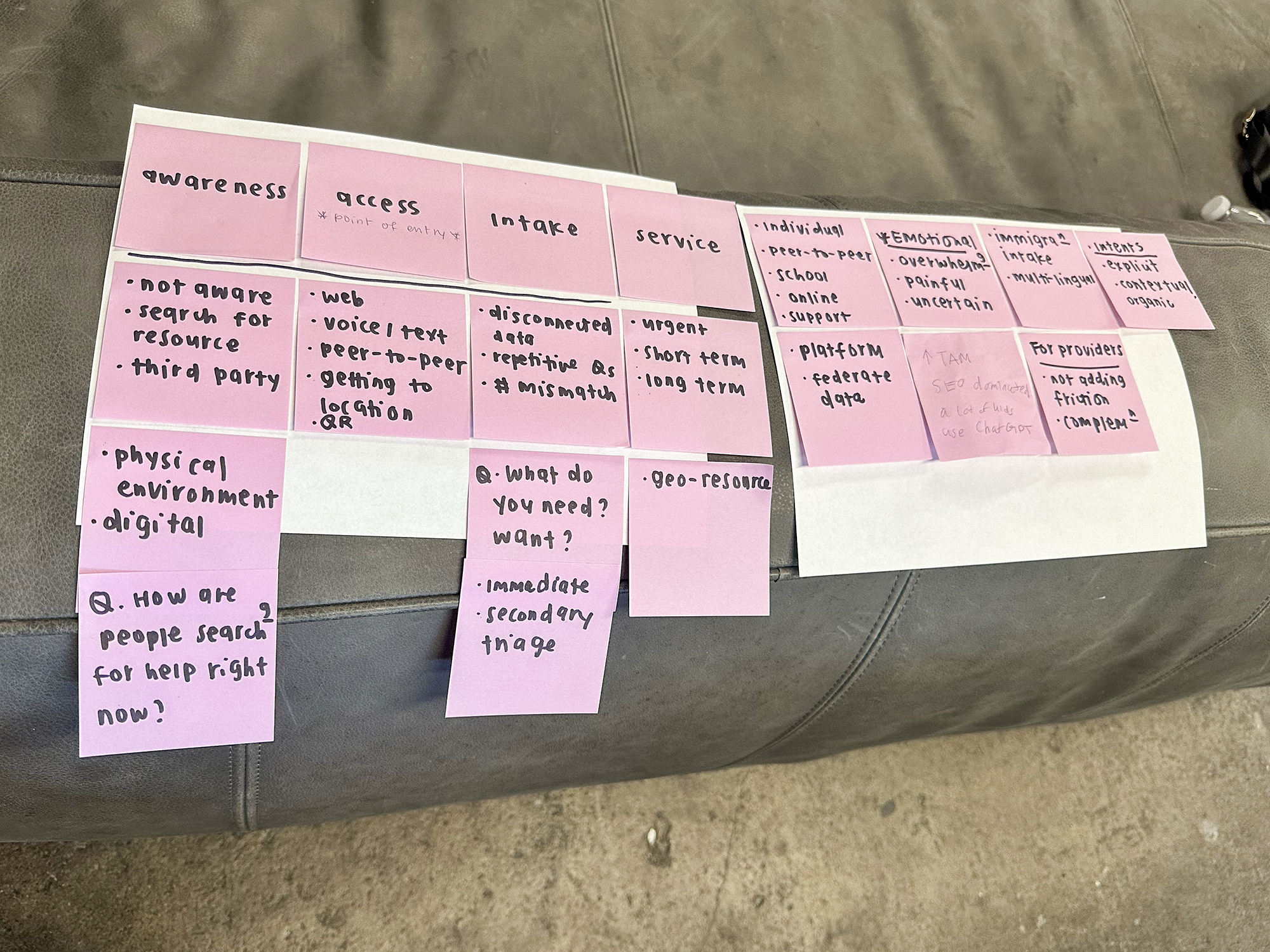
Our approach zoomed in on the biggest pain point in the youths' journey interacting with agencies that often required them to relive their most traumatizing experiences. We focused on the compassionate, human aspect of the challenge without immediately jumping into a technical solution. Listening to interviews with youth, considering the seams of their journey, and reconsidering a secure data-sharing system while being mindful of sensitive personal information.
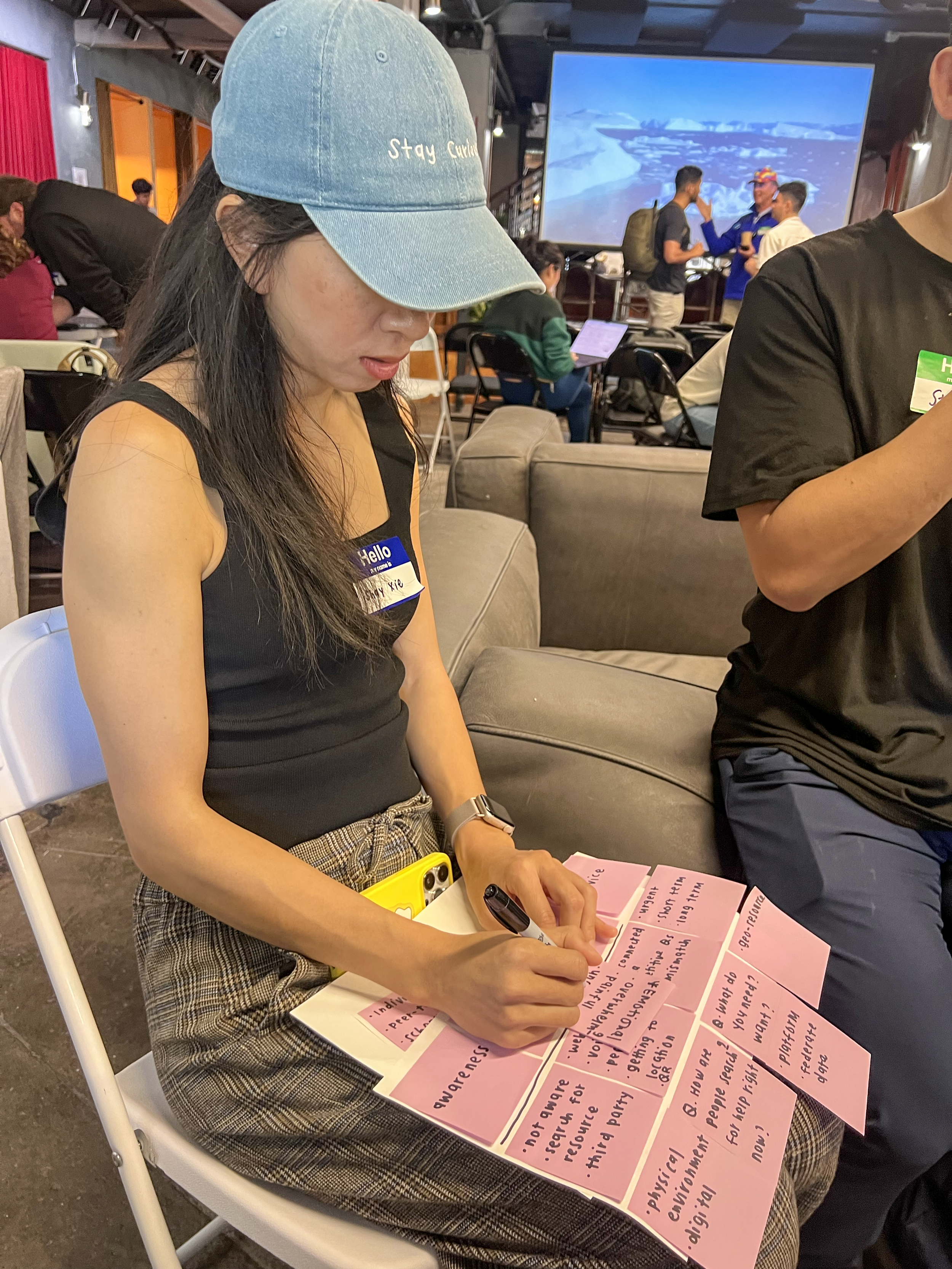
During the hackathon, my design process came in clutch – from clarifying our problem statements, to mapping the youths’ journey, capturing team ideas, prioritizing project direction, ideating with GenAI tools such as Lovable and Claude, creating a 1-page summary, and to coaching team members’ presentations.
40 hours wasn’t enough time to expand on our project more thoughtfully. I've already jotted down a few more pages of notes since then to continue to build for this very vulnerable population.

A quick 1-pager of our project. You can also see the prototype before I passed it onto my teammates on GitHub.
Young people’s existing contact points with agencies include calls and texts because they usually have access to a mobile device. Therefore, we started with a mobile-first approach while not assuming a 24/7 internet access, either. A thoughtful approach to a cross-channel continuation of their intake form preparation would also be needed as life and tough emotions could happen to interfere with filling out their forms in one sitting.
Build trust and perceived ease with clear time expectations
Finding reliable information and help online as a youth experiencing homelessness can come with a huge amount of work and uncertainty. We set clear expectations on the process and time upfront so youths seeking help can enter the process feeling informed and in control.
2. Prioritize urgent needs with progressive, as-needed information collection and clear explanations
One top insight we heard was that many agencies providing help jumped into collecting very sensitive information right away. We give the youths control and choice over what matters the most to them and build a “digital passport” for them through trauma-informed, caring conversations incrementally, asking sensitive information only when needed and providing additional suggestions on other help they qualify for, reducing the effort needed for the youths to track down everything to get help.
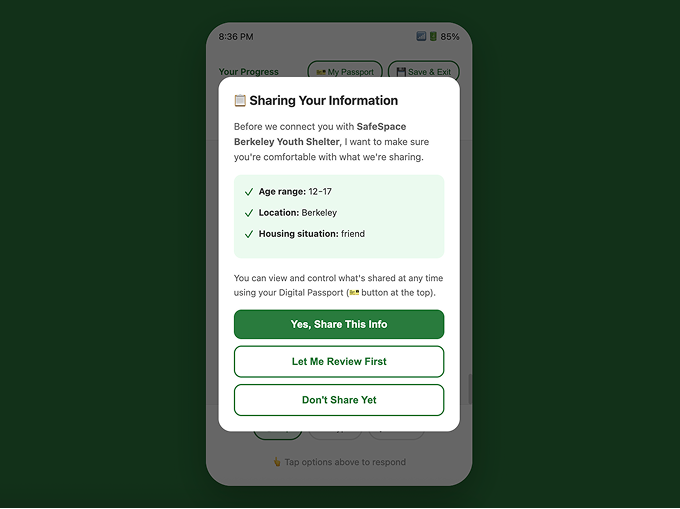
3. Save session and pick progress back up with web, text, or call when it’s convenient
Considering life happens and traumatic events would become so overwhelming that a break in the session is needed, there should also be a way to help save progress and allowing the youths to come back and continue in whichever form of communication channel works for them at a later time.
*Recognizing that data privacy and security is very important here, I’ll update here after my consultation with a cyber security expert on the best and simplest approach to data storage and retrieval.
Additional quick reflections:
It was my first hackathon 🎉 And glad to report the 4-5 initial strangers are now happy *FRIENDS*.
Claude has become my favorite GenAI "design" tool because it understood the technical assignment, contexts, AND brought in very thoughtful additional UI patterns based on my prompts.
I noticed I repeatedly refer to GenAI-produced UI mock-ups and flows as "sketches" to refocus on the core ideas – using the artifacts to closely evaluate if we were on the right track.
Never take having "technology" – e.g., 24/7 internet access, touchscreen devices – for granted. Recognize our privilege.
"Never design for us, without us." I'd love to interview and get youths experiencing various degrees of homelessness to give us feedback, so I can improve the current project to work better for what they need.
Technology aside, I still see this as a human and social issue, which means we must also reflect on the systemic structure, cultural nuances, and raise more awareness for what support could look like.
I remember a time I had to go to the ER and a nurse named Clara held my hand during a particularly painful procedure. The human warmth comforted me at my most vulnerable and lonely moment. I think about how I can bring the equivalent of Clara's warmth to the youths experiencing homelessness.
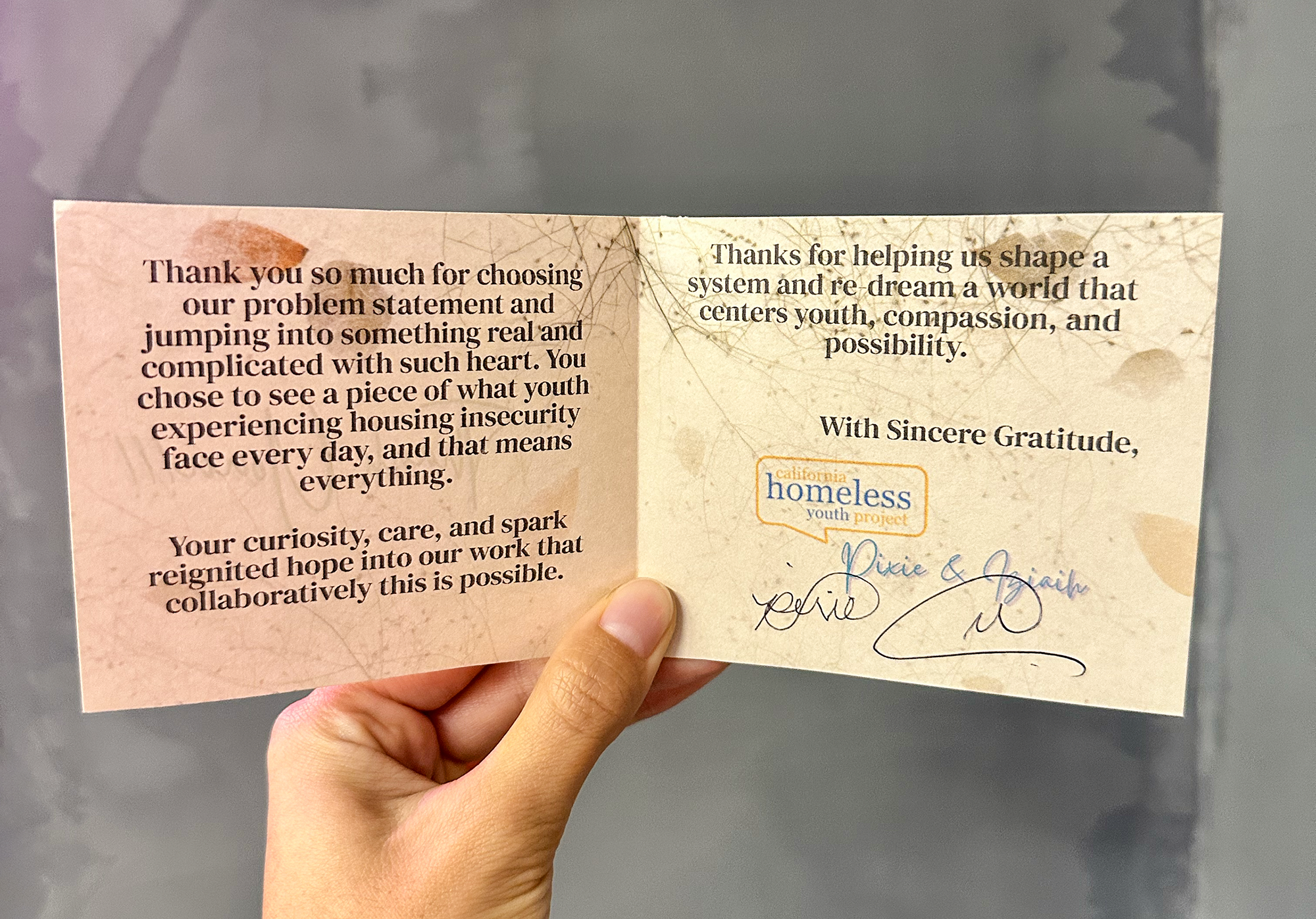
Left the hackathon touched, inspired, and hopeful. 💚
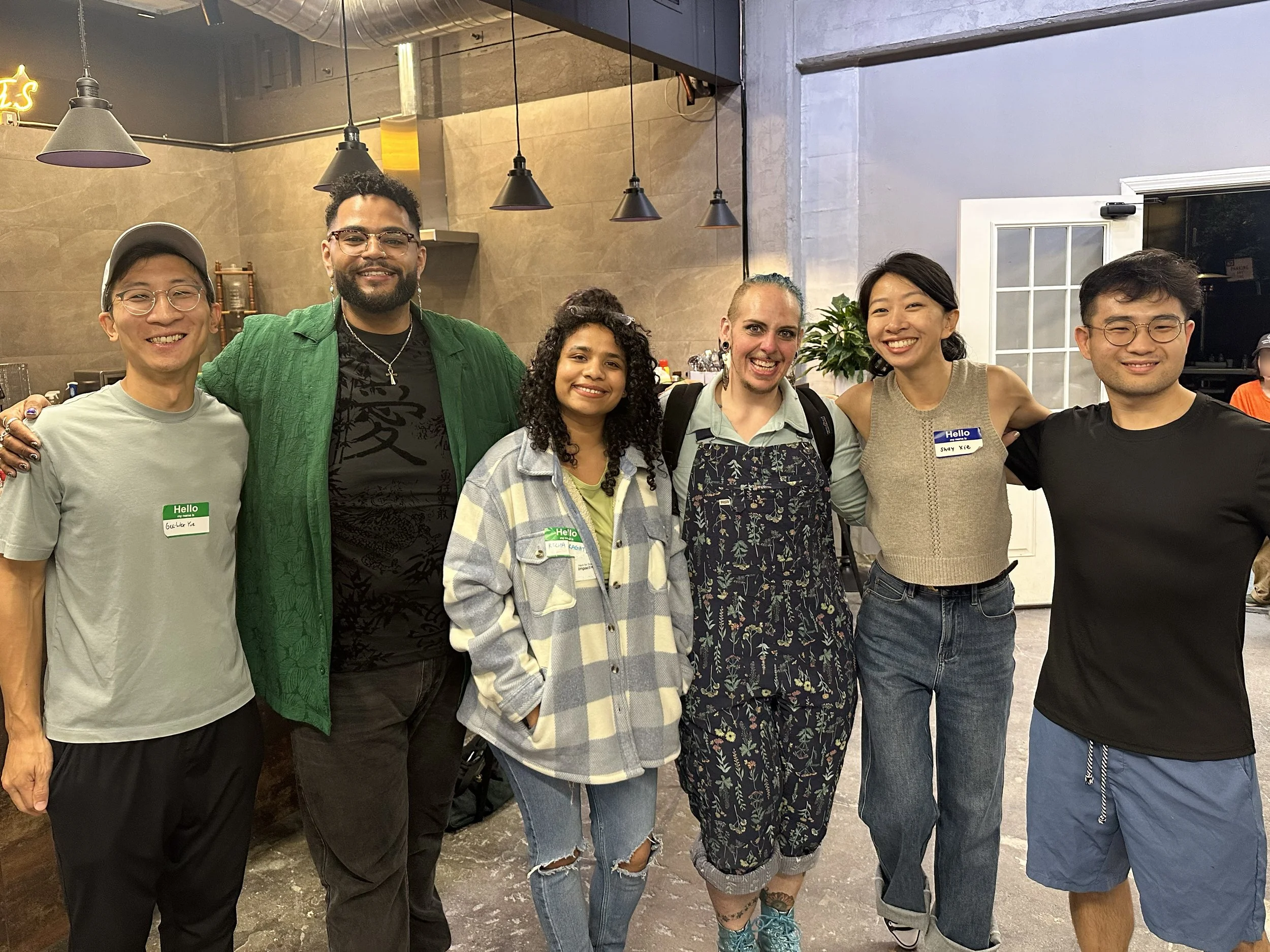
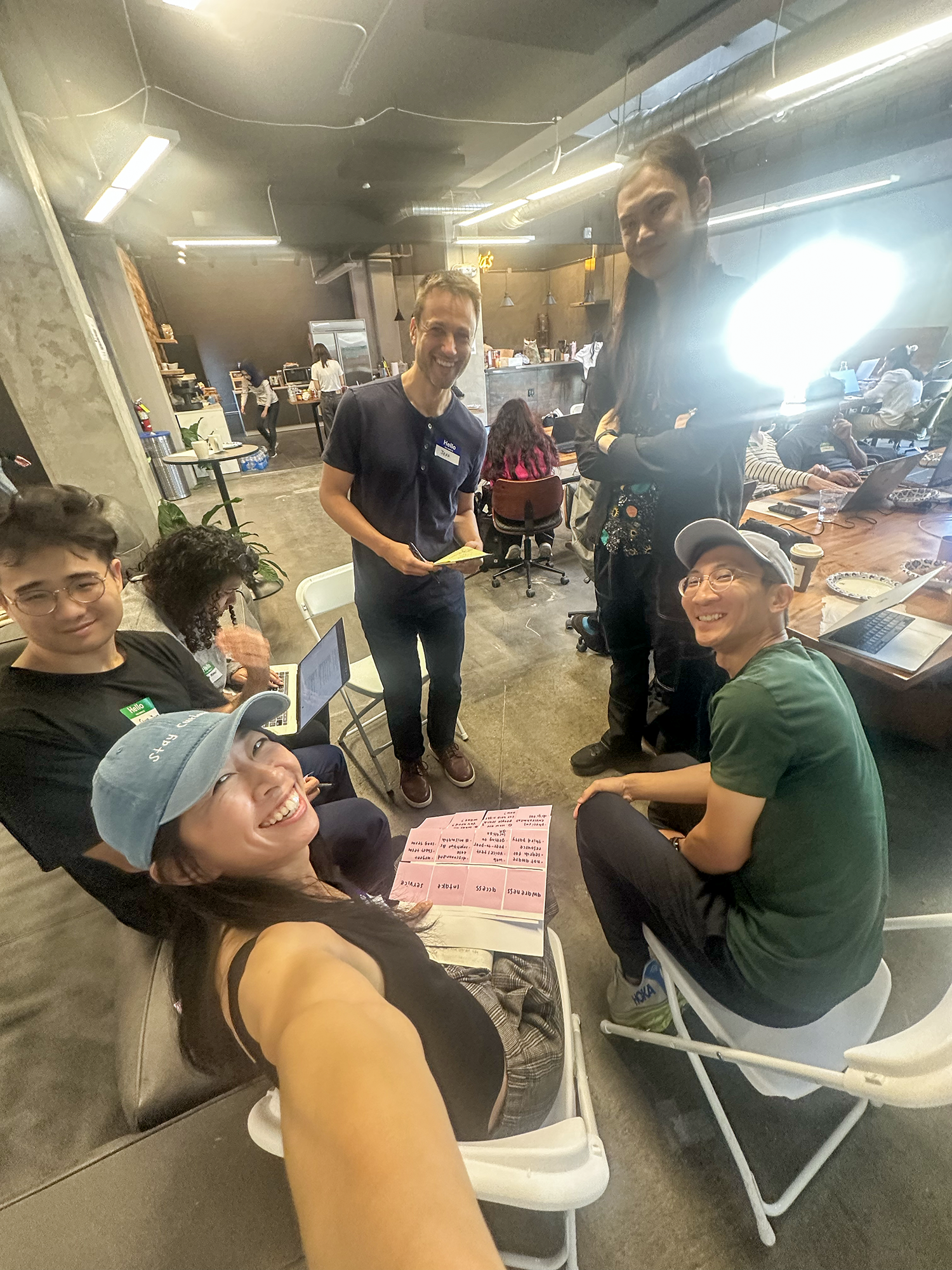
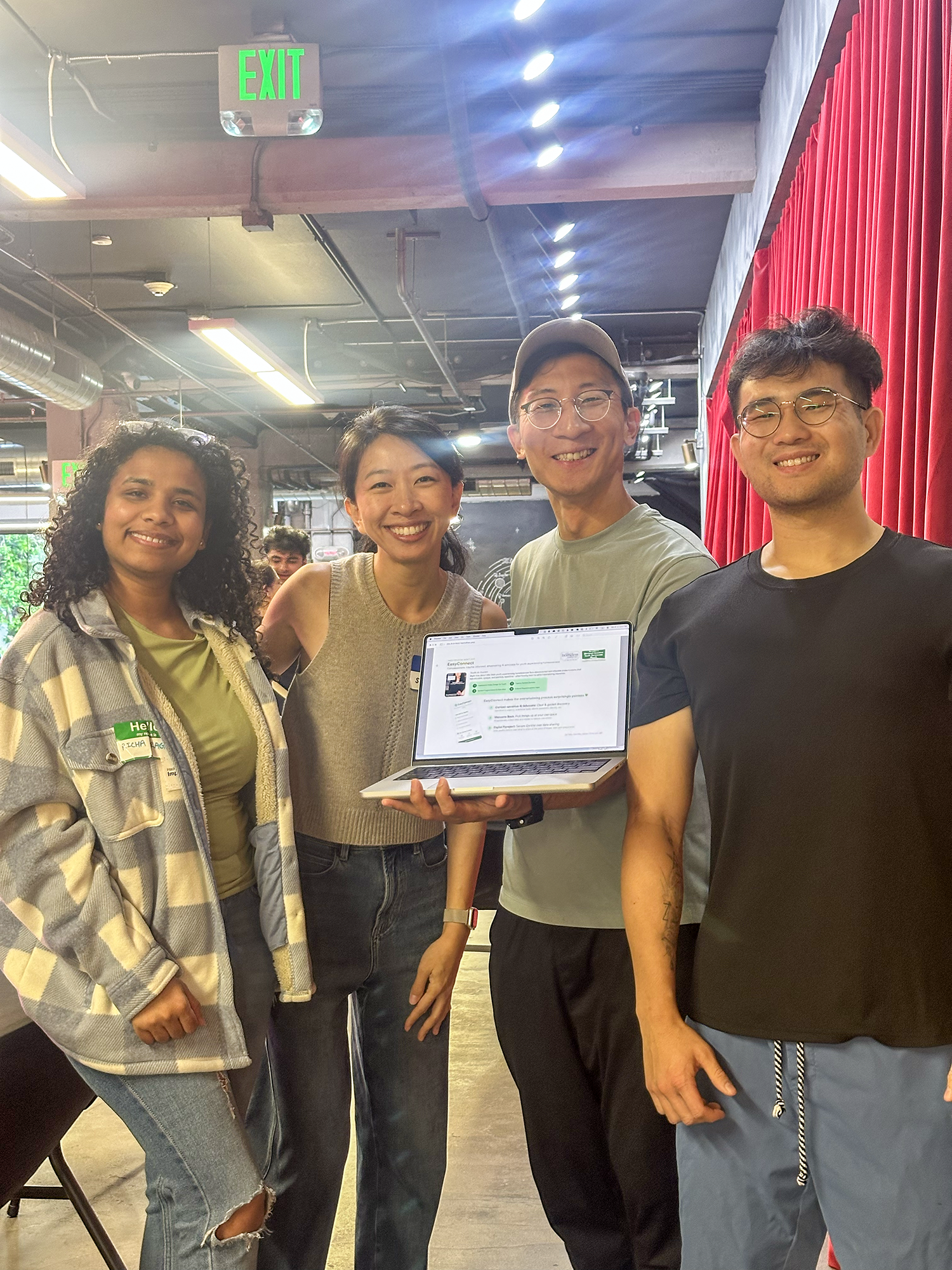
Team photo: Gee-Wey, Iziaih, Richa, Pixie, Me, Steven
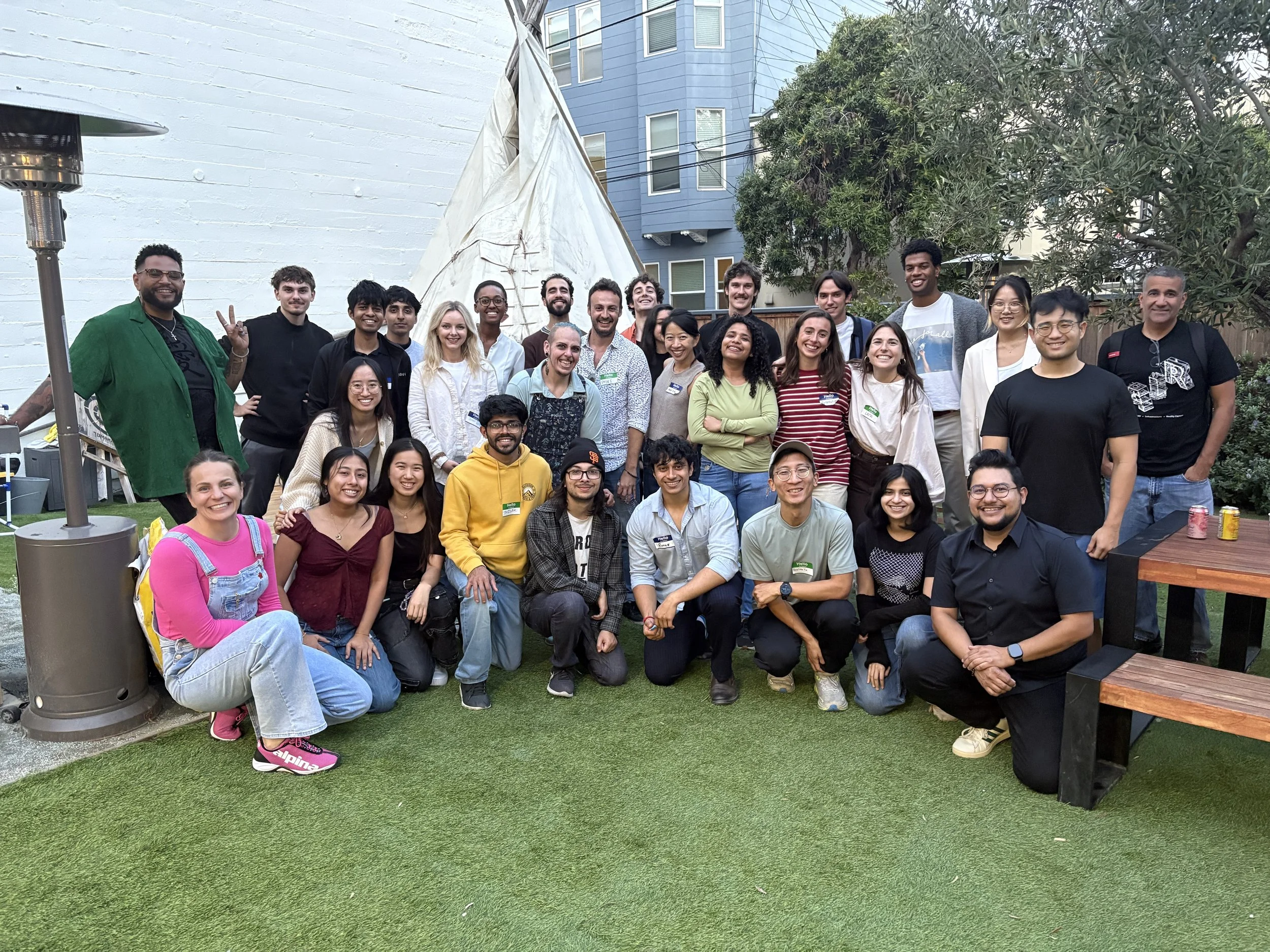
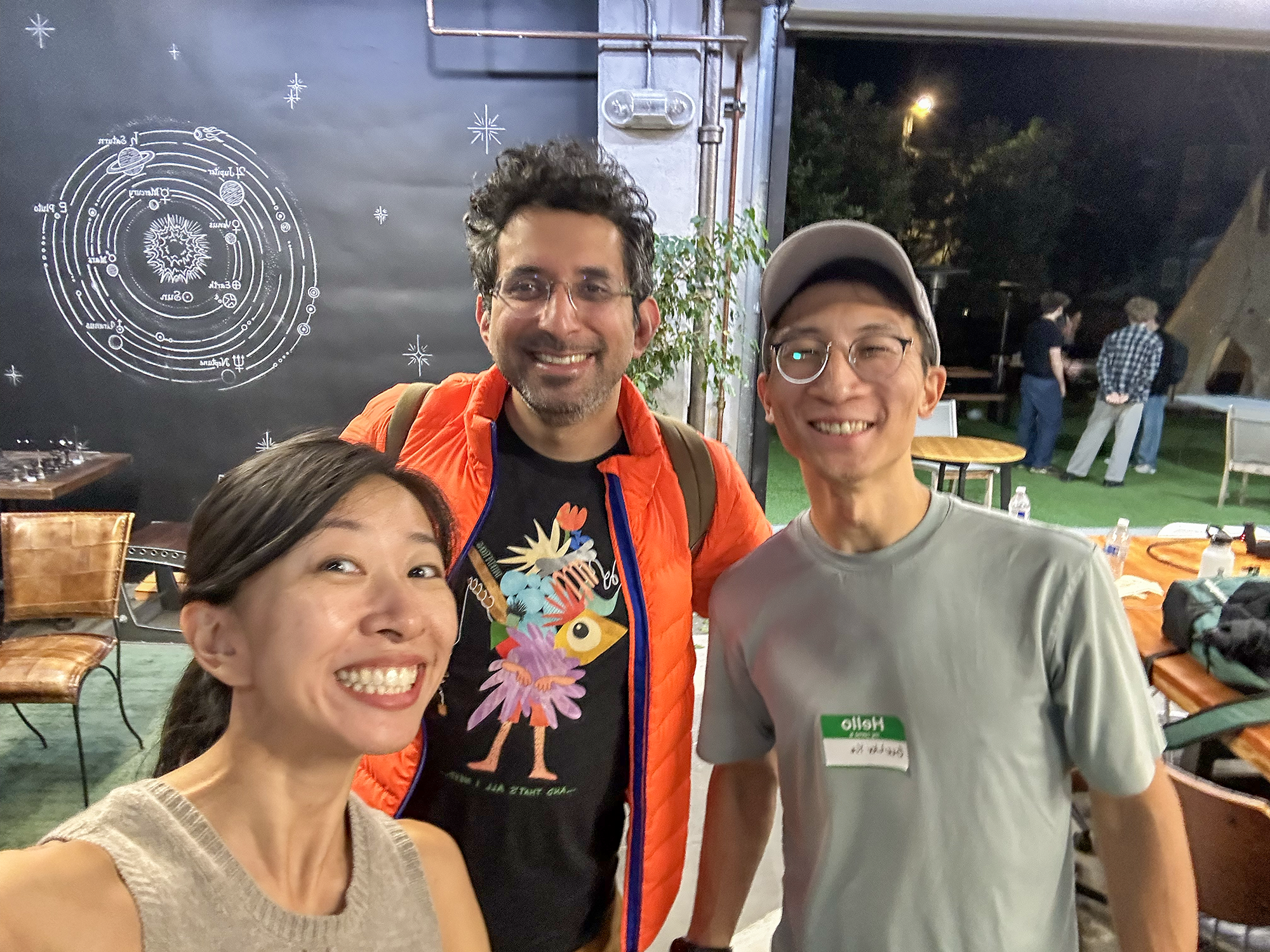
Many teams came together to work on the topic for youth experiencing homelessness
More process pictures!
You can see how much I helped our team comb through the user journey with notes and questions instead of us all jumping into using tech right away.